Health Science
- Program Type: Transfer
- Degree / Certificate Type: AS
Health Science AS

Why study Health Science AS at FMCC
This program provides a broad foundation for careers in the healthcare and medical fields. This innovative curriculum is designed to prepare graduating students for transfer to four-year colleges and universities. The program is a multidisciplinary approach that is well-rounded in the area of the natural sciences, social sciences, communication, and health.
Request info for this program
Career Pathways
Our region boasts a wide variety of career opportunities with competitive salaries in the healthcare and medical fields after students transfer and earn their bachelorette or graduate degree(s). The positions presented are potential career pathways FMCC graduates can take and are just a sample of the many career possibilities.
The labor market and employer information are specifically presented for the Amsterdam, Gloversville, Capital District, and the Mohawk Valley regions. Salary information is based on estimates within the Capital District.
Salary information presented are estimates and can be different for each individual based on education, experience, and the specific employer.
Labor market data is based on 2021 estimates derived from Lightcast (Career Coach | Lightcast)
Some of Our Regional Employers
Our commitment to your career path goes beyond the classroom with continued expansion of hands-on internships, job shadowing, and job placement opportunities with over 50 regional business and organization exclusive partners, a career network of over 200 regional companies and organizations; plus Annual Job Fairs every Spring semester.
-
Albany Med
-
St. Mary's
-

St. Peter's Health Partners
-
Trinity Health
Transfer Opportunities
Being part of the largest system of public higher education in the United States, the State University of New York, SUNY FMCC has established a multitude of transfer pathways for our students at both SUNY and Private schools. Below are some of our major transfer colleges and universities.
-
Albany College of Pharmacy and Health Sciences
Majors: Biomedical Technology, B.S. Clinical Laboratory Sciences B.S., Microbiology B.S., Pharmaceutical Sciences B.S., Public Health B.S. to Doctor of Pharmacy
-
Upstate Medical University
Majors: Cardiovascular Profusion B.S., Medical Imaging B.S., Medical Technology, B.S., Physical Therapy B.S., Radiation Therapy B.S., Respiratory Care B.S., and Nursing B.S.
-
Maria College
Majors: Health & Occupational Sciences B.S.
-
Fact 1
60 Credits
-
Fact 2
#1
-
Fact 3
4 NEW
Program Insight
Graduates of the Health Studies program have gone on to rewarding healthcare careers after transferring to 4-year colleges and universities. The education at SUNY FMCC provides a strong foundation in preparing you for future career success.
Learning Outcomes
Students will be able to:
-
Demonstrate the safe and proper use of scientific instrumentation, measuring devices, chemical reagents, media, and/or tools of science in a laboratory setting.
-
Demonstrate communication, problem solving and critical thinking skills pertinent in the healthcare sector.
-
Understand and utilize the scientific method.
-
Promote health and wellness among members of the college and/or local communities, through service learning
Program Features
Health Science - Video:
Experienced Faculty
Learn from dedicated professors who have years of experience working in various areas of the science and healthcare fields.
Service Learning Projects
Students will deepen their understanding of course material in HLT 201 Health Science Seminar and carry out semester long service learning projects that addresses a need of individuals, organizations, schools, or other entities in the community.
Transfer Planning Support
Students have support from the Academic Advising Office to guide you through your program including transfer planning with 4-year colleges and universities.
Dual Admissions Opportunities
Take advantage of the dual admissions opportunities and be accepted into bachelorette health science related programs at either Upstate Medical University, and Maria College while attending the Health Science program at SUNY FMCC.
Program Gallery
-
-
-
-
-
-
 Lorem ipsum dolor sit amet, consectetur adipiscing elit, sed do eiusmod.
 -
Flor Trespalacios, Ph.D, is the instructor of Health Sciences at SUNY FMCC.
-
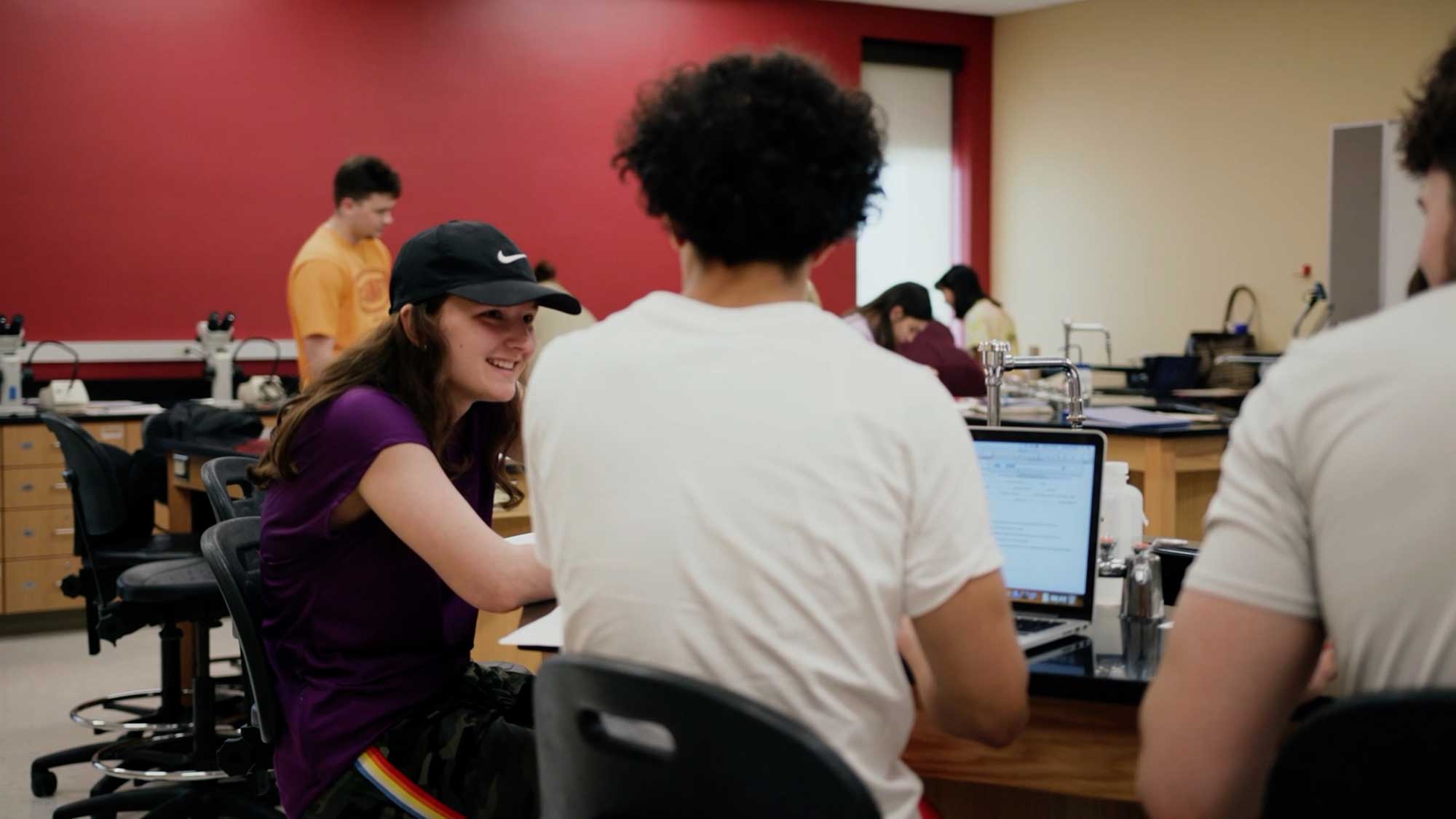 Lorem ipsum dolor sit amet, consectetur adipiscing elit, sed do eiusmod.
Course Highlights
Program Course Layout
The program provides a strong foundation for students transferring to four-year colleges and universities. The coursework combines natural sciences, social sciences, communication, and health along with general education courses. Here are some of the courses you will take.
-
HLT 101 Introduction to Allied Health
This course will expose students to a diversity of potential careers in health care and related fields. Students will become familiar with healthcare delivery in the United States. Students will explore employment opportunities and current trends within the industry. Emphasis will be placed on the skills, personal attributes, and academic preparation required for various health related occupations.
-
BIO 282 Microbiology
An introduction to the biology of microorganisms, with a focus on bacteria. Course topics include biochemistry, cell structure and function, metabolism, microbial ecology, microbial genetics, applied microbiology, microbial control, epidemiology, pathogenesis and microbial disease. Laboratory exercises reinforce those principles discussed in lecture.
-
HLT 201 Health Science Seminar
In this course, students will explore a health science related career, through a job shadow experience. Each student will develop a personal plan to achieve their academic and career goals. Students will participate in a service learning project that addresses a need of individuals, organizations, schools, or other entities in the community.
-
SCI 129 Nutrition
This course includes: the biological roles of energy, protein, vitamins, and minerals; digestion, absorption, and storage of nutrients; the chemical nature of foods and food processing; assessment of nutritional status; interactions of nutrients and disease; food supplementation; and community nutrition.
View Schedule Information
Meet the Faculty
Related Programs